
Construction of Hydropower Plants in Bosnia and Herzegovina Will Destroy Our Nature: ‘The Neretva Valley Will Become a Desert…’
The Golden Valley of the Neretva is likely, if current trends continue, to soon become the Salty Valley of the Neretva. The Upper Horizons project, a hydropower megaproject of the Republika Srpska Power Utility with roots dating back to 1956 and the former Yugoslavia, poses an ever-growing threat to the residents of eastern Herzegovina, the Neretva Valley, and even the Ston area. At the beginning of the year, the Ulog Hydropower Plant was put into operation, while construction work on the project’s main facility, the Dabar Hydropower Plant, is in full swing.
According to our experts, the Upper Horizons project, which includes the Dabar Hydropower Plant, could have very serious and long-term negative impacts and represents a major threat to the biodiversity of the Neretva Valley, one of the most ecologically valuable areas in Southeast Europe. For this reason, the Public Institution, in cooperation with the County and the competent ministry, issued opinions on the project and, in accordance with the ESPOO Convention, requested guarantees from neighboring Bosnia and Herzegovina that no damage would occur. To this day, however, we have not received such guarantees – said Marijana Miljas Đuračić, Director of the Public Institution for the Management of Protected Natural Areas of Dubrovnik–Neretva County.
Reduced inflow of fresh water
Although the project is physically located upstream in neighboring Bosnia and Herzegovina, its impacts are transmitted downstream into the territory of the Republic of Croatia through a complex system of karst underground and surface waters that directly feed the Neretva River and the Mali Ston Bay area.
The project involves the accumulation and diversion of large volumes of water, altering the natural hydrological regime of the Neretva. A reduced inflow of freshwater into the lower course of the river disrupts seasonal flooding and natural cycles that are crucial for preserving wetland habitats, fish spawning, the survival of fish stocks, and numerous aquatic and wetland species – she emphasized, adding that reduced freshwater inflow further encourages seawater intrusion into the lower course and delta of the Neretva, causing salinization of soil and freshwater ecosystems.
The biodiversity of the Neretva has exceptional national, European, and international value, including protected areas, Natura 2000 sites, and the Ramsar-listed Neretva Delta. Any further disturbance of the natural water regime without a comprehensive, scientifically grounded, and cross-border environmental impact assessment poses a serious risk to the preservation of this unique river system – Miljas Đuračić explained.
If the Upper Horizons project is completed, Neretva mandarins, watermelons, apples, strawberries, and other crops will become a thing of the past, while Mali Ston oysters will also face a serious threat.
Mali Ston Bay, one of the most important shellfish farming areas in Croatia and beyond, is particularly sensitive to changes in freshwater inflow. Reduced freshwater input, the emergence of submarine springs, and disturbances in salinity and water quality could have devastating consequences for oyster and mussel farming, directly affecting the livelihoods of local growers, related activities such as tourism and hospitality, and the entire economy of the area – Miljas Đuračić stressed.
‘This is a matter of responsibility toward future generations’
In addition, the Upper Horizons project calls fundamental human rights into question.
The right of every person to drinking water is recognized internationally by the United Nations as a fundamental human right. The Neretva has provided people with drinking water, fertile soil for agriculture, and abundant fish, enabling permanent settlement and the development of communities along its banks – Miljas Đuračić said.
Protecting the Neretva River’s water resources is not merely a local issue, but a matter of nature conservation and responsibility toward future generations.
We believe it is unacceptable to carry out such large-scale hydropower interventions without a comprehensive, transparent, and cross-border assessment of environmental and economic impacts – Miljas Đuračić concluded.
She is supported in this view by Academician Muriz Spahić, who has devoted his life to geography and research.
The completed and operational Ulog Hydropower Plant already confirms the first negative effects. These primarily relate to an arbitrary change in the plant’s operating regime, contrary to the Project and the Environmental Impact Study, from a run-of-river to a peak-load regime, during which significantly larger quantities of water are released from the reservoir than originally planned – Spahić explained.
As a consequence of this mode of operation, a mass fish die-off occurred in September this year in the upper course of the Neretva River, immediately downstream from the Ulog plant.
‘It will be even worse once Dabar comes online’
Although the competent institutions denied any link between the incident and the operation of the Ulog plant, our research indicates that the plant was operating in a hydropeaking regime, contrary to the rules set out in the environmental permit, releasing deep water poor in oxygen, which led to mass suffocation of aquatic organisms – Spahić explained.
The research was conducted in cooperation with domestic experts and hydrologists from the European Union, who carried out on-site measurements of dissolved gas concentrations in water at various depths.
The already dire situation will become even worse once the Dabar Hydropower Plant is commissioned. Dabar is one of the key central facilities within the Upper Horizons project, currently being intensively built by Chinese contractors, with completion expected by the end of 2027. The dangers of the project have been warned about for decades by Ana Musa, President of the association Lijepa Naša for Dubrovnik–Neretva County and a member of its national leadership.
The Upper Horizons project was initiated in the former Yugoslavia nearly 70 years ago, and as part of its first phase, the Trebinje I and II hydropower plants, the Čapljina pumped-storage plant, and the Plat hydropower plant were built. The continuation of this project is the Upper Horizons scheme, launched in Republika Srpska by the company EFT, headquartered in the United Kingdom. One of its owners is Serbian businessman Vuk Hamović, who cooperates with the Republika Srpska Power Utility. Now, in the final phase, Chinese financiers are involved, but construction of the underground tunnels began under the British investor EFT and Vuk Hamović – Musa explained.
She is proud that through the Lijepa Naša association, as president of its Ploče branch, she was the first in Croatia to alert the public to the Upper Horizons megaproject back in 2006.
This is a devastating hydropower megaproject whose final realization would divert two billion cubic meters of water from the Neretva basin into the Trebišnjica basin, turning the Neretva Valley, its tributaries Buna, Bregava, and Bunica, and the Neretva estuary into a desert – Musa warned, offering grim but realistic forecasts.
Although international conventions (the Aarhus Convention and the ESPOO Convention) oblige Bosnia and Herzegovina to include Croatia and its residents in the environmental impact assessment process—and this obligation also arises from the Environmental Protection Act of Republika Srpska—nothing has been done so far.
The ESPOO Convention obliges the contracting parties (Croatia and Bosnia and Herzegovina) to take all legal, administrative, or other measures arising from the Convention in relation to proposed activities that may cause significant transboundary environmental impacts. The main objective is to prevent, reduce, and limit possible significant transboundary harm caused by the proposed project. It is evident that the Upper Horizons project is already causing harmful impacts – Musa said. The Croatian Ministry of Environmental Protection and Green Transition has sent a letter to the Implementation Committee of the Convention on Environmental Impact Assessment in a Transboundary Context, requesting the activation and application of ESPOO Convention mechanisms.
Court annulled permit for Dabar Hydropower Plant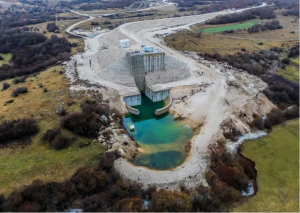
Musa recalled that in November 2014, a court in Banja Luka dismissed objections from authorities of the Federation of Bosnia and Herzegovina, who warned that construction of the Dabar Hydropower Plant within the Upper Horizons project in eastern Herzegovina would endanger the Buna River and the lower Neretva basin, as had also been warned by numerous NGOs and experts. Ten years later, in August 2024, the District Court in Banja Luka issued a ruling annulling the permit for the construction of Dabar Hydropower Plant infrastructure facilities.
Despite all the arguments and the court ban, Republika Srpska has not abandoned the project. For whose interests is the life of 35,000 residents of the Neretva Valley, as well as Stolac and the Hutovo Blato Nature Park, being destroyed? – Musa asked anxiously.
After years of struggle, Academician Spahić no longer sees a solution.
Past experience shows that in an environment where no one wants to listen to others, where everyone behaves as if they possess absolute knowledge, and where political position is mistakenly equated with intellectual superiority, there is no real possibility of stopping harmful projects in time. The prevailing belief is that merely holding political office proves the correctness of one’s decisions, which completely excludes expert dialogue and critical examination – Spahić emphasized.
‘Croatia has absolutely no control’
Neretva protection activist Ivica Puljan also sees no solution.
Very little can still be done to prevent a catastrophe. The Dabar Hydropower Plant will, in addition to the existing six billion cubic meters of water annually already diverted from the Neretva basin into the Trebišnjica basin, take another two billion cubic meters. It will significantly weaken the two most important springs on the left bank of the Neretva—the Buna and Bunica. They will let water through to us, but in summer, when rainfall is scarce and crises arise, they will divert all that water to themselves. Croatia has absolutely no control over what is happening upstream in Bosnia and Herzegovina – Puljan said, adding that construction of a dam on the Neretva between Komin and Opuzen is about to begin.
That dam should prevent seawater intrusion, but it will not solve the problem. It would serve its purpose only if enough water were flowing down the Neretva to be retained and used to irrigate canals and fields, but unfortunately, that will not be the case – Puljan concluded.
Text and photos source: 24sata.hr


![P6 700×411[1]](https://novival.info/wp-content/uploads/2021/05/p6-700x4111.jpg)